Gisela Long · 12 September 2026
Sequential Interaction Mapping: How Enopath Reveals Shifts in Multi-Platform User Journeys
Sequential interaction mapping tracks user actions across websites, apps, and social channels in chronological order, and Enopath applies this method to detect changes in behavior patterns that single-platform tools often miss. Researchers at various institutions have documented how users move between devices and services, with data from multiple studies indicating that 70 percent of digital interactions now span at least three distinct platforms within a single session.
Defining Sequential Interaction Mapping
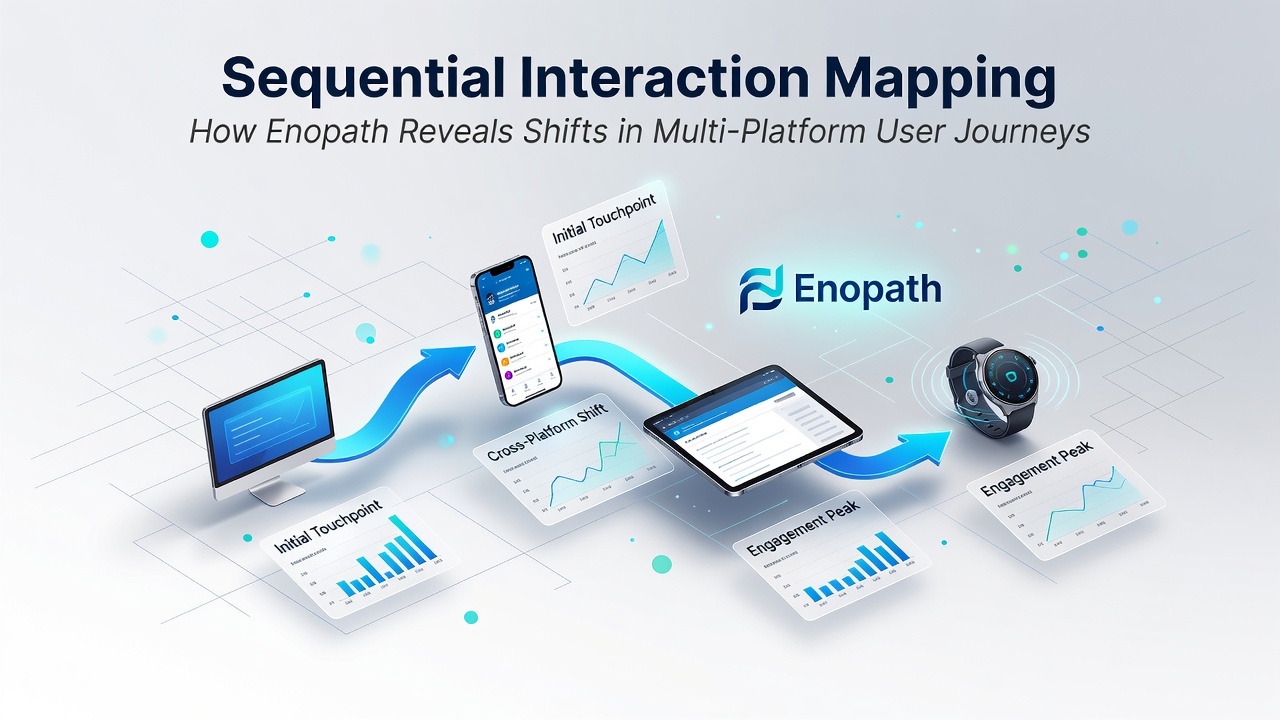
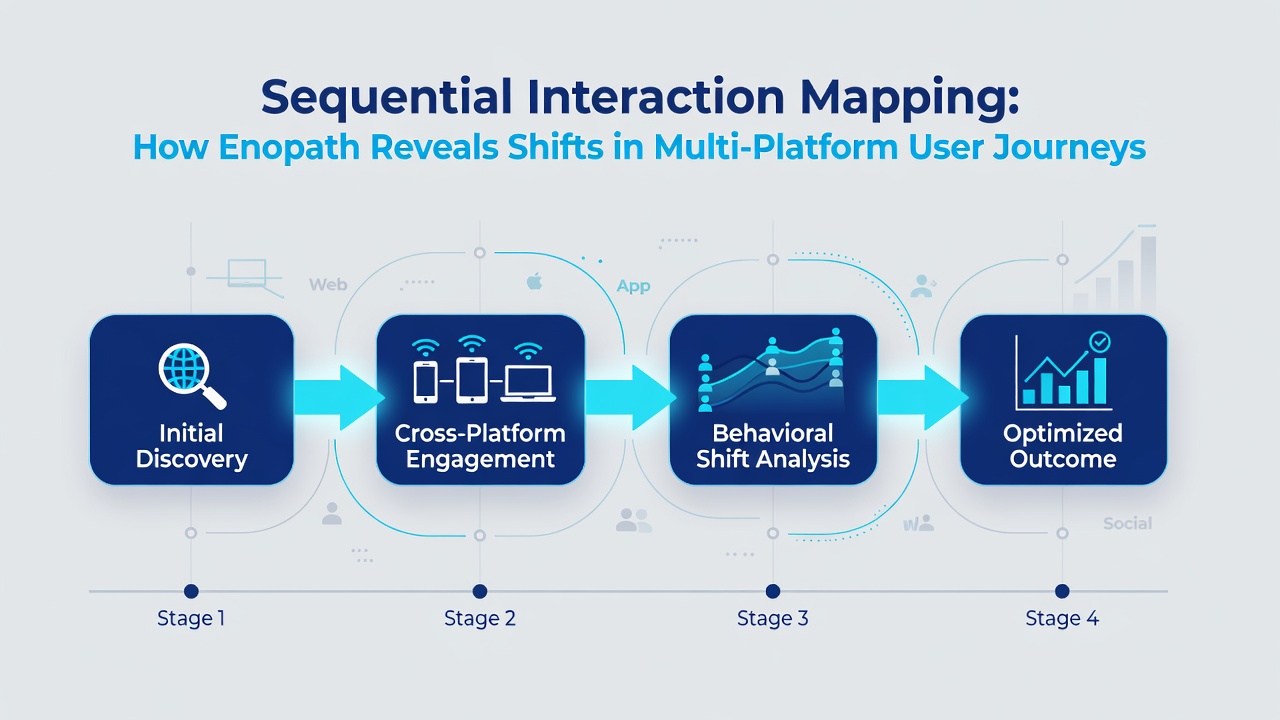
Sequential interaction mapping records the order and context of each user touchpoint rather than isolated events, so analysts receive a timeline that shows transitions from one environment to another. This approach differs from traditional funnel analysis because it preserves the sequence of platform switches and the time intervals between them, which allows patterns such as repeated returns to a mobile app after desktop research to surface clearly.
Enopath processes raw event logs from connected sources and reconstructs these sequences into visual maps that update as new data arrives. The system assigns unique identifiers to sessions while maintaining privacy standards required by current regulations, and it flags deviations from established user paths without storing personal details beyond necessary timestamps and platform references.
Platform Integration and Data Flow
Enopath connects to web analytics platforms, mobile SDKs, and social media APIs through standardized data pipelines, which means organizations can feed information from their existing tools into a unified mapping engine. Once ingested, the platform aligns timestamps across sources using server-side synchronization, and it resolves common user identifiers where consent allows while respecting regional data protection rules.
Those who have implemented the system report that cross-platform attribution improves because Enopath calculates transition probabilities between channels instead of relying on last-click models alone. In September 2026 several major content networks released updated APIs that provide more granular event metadata, and Enopath incorporated these feeds to refine its mapping accuracy for video and live-stream interactions.
Detecting Shifts in User Behavior
Enopath identifies shifts by comparing current sequence distributions against historical baselines, which highlights changes such as increased mobile-to-smartwatch handoffs or reduced desktop-to-tablet flows. The tool generates alerts when a previously stable transition drops below a configurable threshold, and analysts can drill into the affected sequences to examine contributing factors like content type or time of day.
Data from industry reports shows that users who encounter friction on one platform often reroute through another within minutes, and sequential mapping captures these detours that aggregate metrics tend to obscure. One study published by the Digital Analytics Association found that organizations using sequence-aware tools detected a 22 percent higher rate of platform migration events compared with those limited to session-based reporting.
Applications Across Sectors
Retailers apply sequential mapping to understand how in-app browsing leads to website purchases after social media exposure, while media companies track how audiences move from short-form video platforms to long-form streaming services during a single evening. Government statistical agencies in several countries have begun exploring similar techniques for public service portals to measure how citizens navigate between information sites and application forms.
Enopath supports segmentation by demographic or behavioral cohorts, which lets teams isolate sequences common to specific user groups without exposing individual records. The platform exports mapped data to business intelligence systems so that downstream reporting incorporates the sequence context rather than flattened counts.
Technical Considerations for Implementation
Teams setting up Enopath must align event schemas across platforms to ensure consistent labeling of actions such as "add to cart" or "video start," and they configure privacy controls that comply with applicable legislation in each operating region. The mapping engine handles missing data through statistical imputation methods that preserve overall sequence integrity while noting uncertainty ranges for affected transitions.
Processing occurs in near real time for high-volume sources, and historical maps remain available for longitudinal analysis that spans multiple quarters. Organizations that maintain detailed sequence archives can compare pre- and post-campaign maps to quantify the impact of platform-specific updates on user movement patterns.
Conclusion
Sequential interaction mapping through Enopath supplies a structured view of how users traverse multiple digital environments, and the resulting timelines support more precise measurement of behavioral changes. As platform ecosystems continue to evolve, the ability to reconstruct and compare sequences across sources provides organizations with evidence-based insight into shifting user journeys without relying on assumptions derived from single-channel data alone.