Gisela Long · 10 October 2026
Uncovering Shifts in Scattered Digital Activity Using Chain Analysis of Events
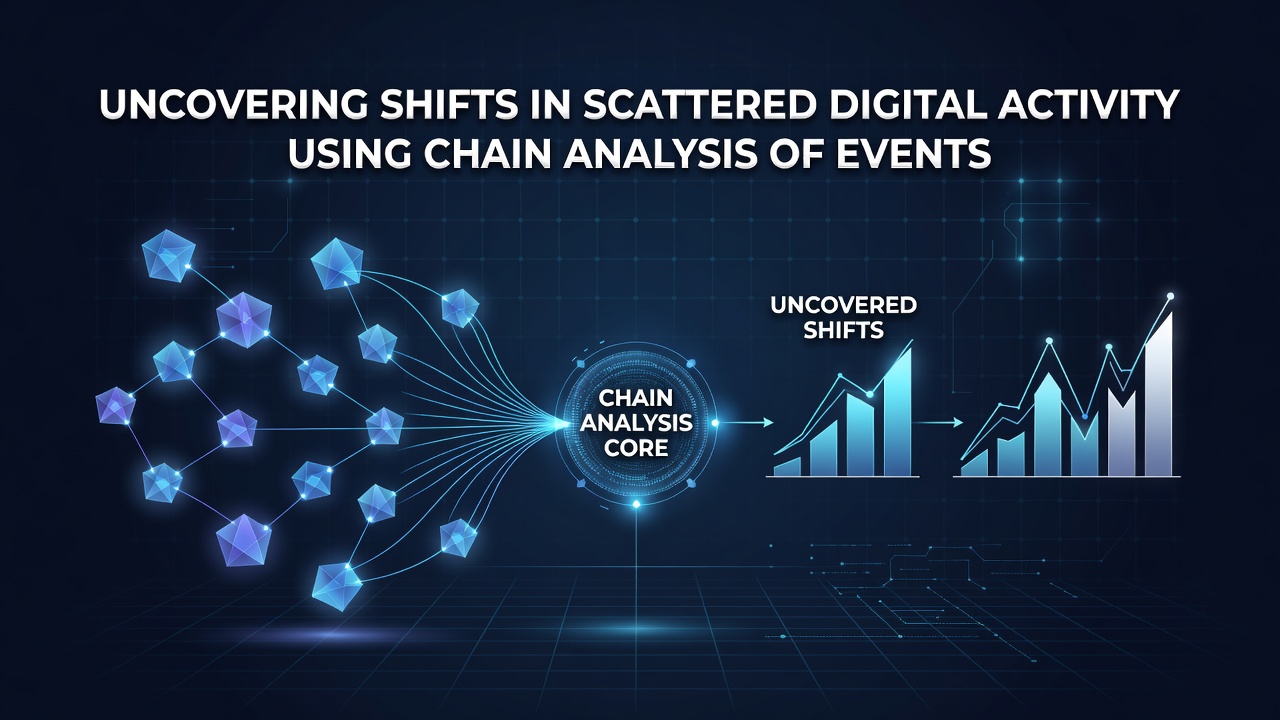
Chain analysis of events offers a structured approach to tracing sequences in digital footprints that span multiple devices, platforms, and time periods, and researchers apply it to detect meaningful shifts in user behavior patterns that might otherwise remain hidden in fragmented data streams.
Understanding Chain Analysis in Digital Contexts
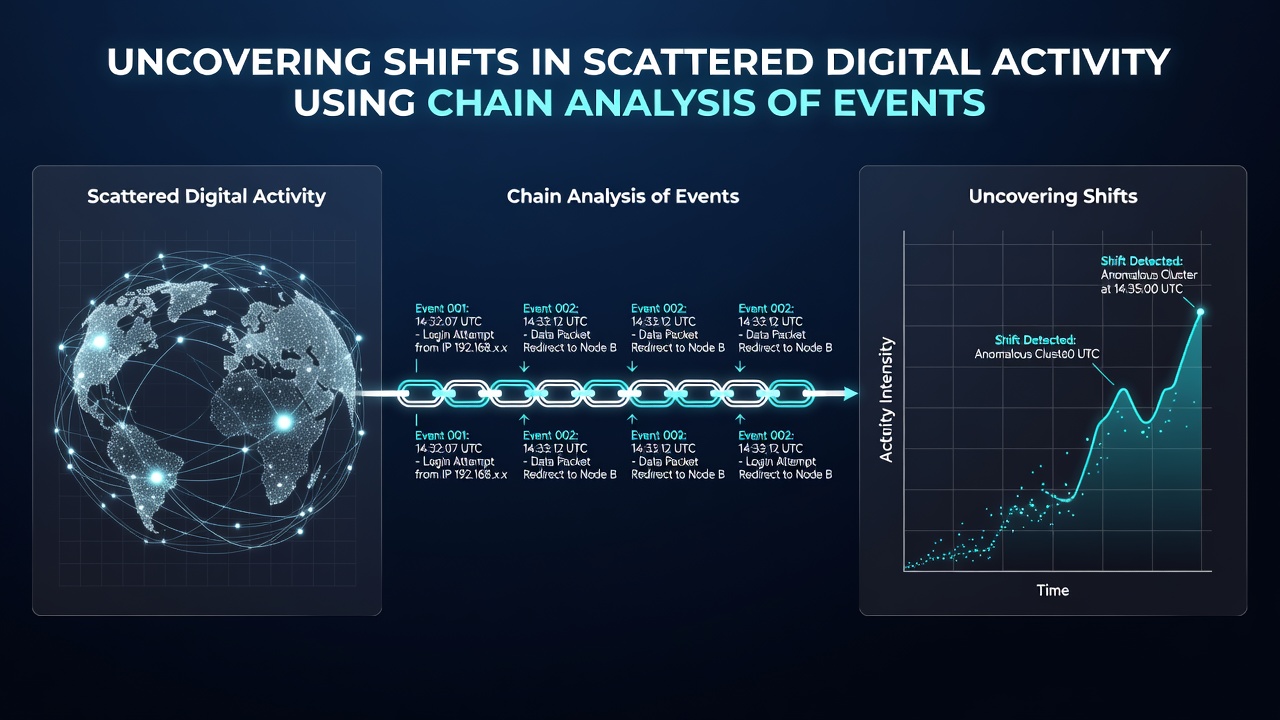
Chain analysis builds timelines by connecting discrete actions such as logins, content interactions, and file transfers into coherent sequences, while data from various sources shows that this method helps identify transitions like changes in access frequency or platform preferences that occur gradually over weeks or months. Observers note that scattered digital activity often arises when individuals use separate accounts across social networks, cloud services, and mobile applications, yet the technique links these elements through timestamps, metadata, and correlation keys that reveal underlying patterns without requiring centralized data collection.
Studies indicate that chain analysis relies on algorithms capable of handling incomplete records, and practitioners combine graph theory with temporal clustering to reconstruct event flows that cross device boundaries. According to reports from the Australian Bureau of Statistics, digital engagement metrics across households increased notably between 2024 and 2025, which creates richer datasets for such analytical work yet also heightens the challenge of separating routine fluctuations from genuine behavioral shifts.
Detecting Behavioral Transitions Through Sequential Mapping
People who monitor online environments find that chain analysis excels at spotting alterations such as sudden increases in cross-platform data sharing or shifts toward encrypted communication channels, and these changes become visible when analysts examine the order and duration of connected events rather than isolated metrics. For instance, one study revealed that participants who altered their device usage habits during late 2025 demonstrated measurable differences in session lengths and content consumption sequences that only emerged after the full chain reconstruction process was complete.
What's interesting is how the method accommodates noise from automated background processes like app updates or sync operations, since filtering techniques isolate human-initiated actions while preserving the overall flow. Data shows that organizations in sectors ranging from cybersecurity to market research have adopted these tools to track evolving user journeys across scattered digital touchpoints, and evidence from Canadian research institutions highlights improved accuracy when chain analysis incorporates location metadata alongside temporal markers.
Practical Applications and Recent Developments
Analysts in October 2026 began integrating chain analysis outputs with emerging privacy-preserving computation frameworks, which allowed teams to examine aggregated event sequences from public datasets without exposing individual identifiers. This development followed updates in data handling protocols that emphasized consent-based linkages, and figures from the European Data Protection Board indicate that compliance reporting volumes rose substantially during the preceding year as entities adapted their monitoring practices.
Take one case where experts examined transaction logs from multiple e-commerce platforms, and they discovered that users who switched primary payment methods exhibited distinct preceding patterns in browsing duration and cart abandonment rates that formed detectable chains. Such findings help refine predictive models, yet the process remains dependent on high-quality input data that maintains chronological integrity across sources. Researchers continue to refine matching thresholds to reduce false connections between unrelated events that happen to share superficial similarities in timing or device type.
Methodological Considerations and Data Integration
Effective chain analysis requires careful selection of linking variables, including IP address ranges, device fingerprints, and session tokens, while practitioners balance precision against the risk of over-connecting unrelated activities that occur in close succession. Reports from academic centers demonstrate that hybrid approaches combining rule-based filters with machine learning classifiers achieve higher recall rates when reconstructing long event chains that span several months of scattered digital interactions.
Those who've studied this area note that visualization tools play a supporting role by rendering complex sequences as node-link diagrams, which enables quicker identification of transition points where behavior changes direction. Integration with external benchmarks, such as those published in industry reports on digital economy trends, further strengthens interpretations of whether observed shifts align with broader population-level movements or represent isolated anomalies.
Conclusion
Chain analysis of events provides a reliable framework for uncovering shifts within scattered digital activity by emphasizing sequential relationships over isolated data points, and continued refinements in October 2026 reflect ongoing adaptations to privacy regulations and technological capabilities. The approach draws from established practices in temporal data mining and graph analysis, which together support objective examination of behavioral patterns across diverse digital environments. As datasets grow in volume and complexity, the method's capacity to reconstruct meaningful chains from fragmented records positions it as a key technique for researchers and analysts seeking factual insights into evolving digital interactions.